Introduction: Understanding the Two Titles
As you take steps towards the phlebotomy career path, you will probably see two titles that are almost identical — Phlebotomy Technician and Phlebotomist. They are the same blood-drawing, sample-handling, and lab assisting roles in general. Nevertheless, there are commonalities in tasks but with subtle distinctions which are important though.
If you are making a decision regarding a profession in this sector, then one thing that you need to do is getting the differences known as per your goals and selecting the right route. We shall make you aware of the scope, the training, the phlebotomist salary insights, and the growth potential pertaining to both roles thereby making it easier for you to decide about your career aspirations.
Are you all set to step into the world of opportunities? Locate the newest vacancies in the field of phlebotomy right here
Scope and Duties: What Each Role Entails
The situation is that the subtle differences between phlebotomy technicians and phlebotomists can very well result from the line of work, the certification level, and the experience they have gained. Still, their basic roles remain the same and would overlap as far as the whole phlebotomy range is concerned.
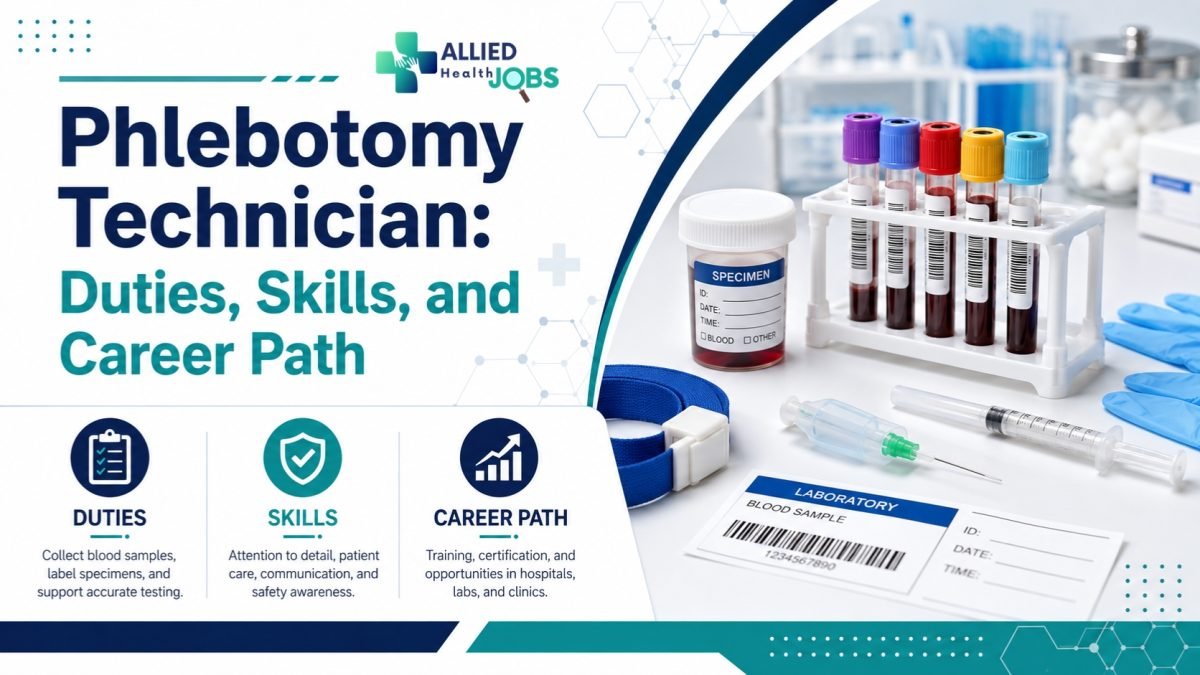
The phlebotomy technicians’ main duties include:
- Drawing blood from patients for medical tests or donations.
- Labeling and handling blood samples accurately.
- Maintaining equipment such as needles, vials, and tourniquets.
- Following strict infection control and patient safety protocols.
- Updating patient records and assisting nurses or lab staff.
On the other side of the coin, phlebotomists do the aforementioned tasks but they usually proceed to a more advanced or specialized position. Besides, in several healthcare institutions, phlebotomists come to be heads of the new technicians or mentors for them, they take care of the big sample collections, or even perform arterial punctures, which are among the specialized procedures.
On a technical level, the work of a phlebotomy technician may revolve mainly around blood draw in most cases while that of a phlebotomist would be a more independent and skilled one. The nice thing is that both functions are at the same time necessary and guarantee the testing results to be accurate for the diagnosis and treatment processes.
Differences in Training and Certification
The educative and training routes for the two professions are almost the same but differ very slightly in their breadth and depth.
Training of a Phlebotomy Technician
- Usually, it is necessary to finish a phlebotomy technician program at an accredited institution.
- The duration of the course is from 4 to 8 months, during which the student learns anatomy, infection control, and venipuncture techniques.
- The program has a component where students practice in a clinical setting supervised by healthcare professionals.
- Students who successfully complete the training will be eligible to take a certification exam, and apply for credentials such as Certified phlebotomy technician (CPT) or Registered Phlebotomy Technician (RPT), through a certifying agency such as the NHA or AMT.
Phlebotomist Training
- A phlebotomist usually has the same basic training as a technician but may take extra courses or gain more experience to qualify for higher certifications.
- Some individuals start their careers as technicians and then move up to be phlebotomists, and some advance to supervisory positions; sometimes it just takes time.
- The phlebotomist title could also involve a local government-issued license in some states, depending on the laws in the area.
In conclusion, the phlebotomy technician vs phlebotomist training difference is mainly in the level of experience, certification depth, and amount of responsibility in the workplace.
Pay and Growth: Salary and Career Outlook Comparison
Salary and job prospects are among the most important factors to consider when one is thinking of getting involved in any phlebotomy role. The good news is that the two professions guarantee a steady demand for employees and provide an opportunity for advancement.
| Aspect | Phlebotomy Technician | Phlebotomist |
| Average Annual Salary | 36,000 – 42,000 dollars | 40,000 – 50,000 dollars |
| Experience Level | Beginner | Intermediate to advanced |
| Work Settings | Clinics, blood donation centers, labs | Hospitals, research facilities, and diagnostic centers |
| Growth Rate | 8–10% (U.S. Bureau of Labor Statistics) | 10–12% (with advanced certifications) |
The phlebotomist salary is usually a bit higher than that of a phlebotomy technician since the phlebotomist has more experience and takes on supervisory duties. At the same time, certification upgrades and skill enhancements such as getting a Certified Phlebotomy Instructor or acquiring Allied health certifications lead to better compensation.
There will be a steady increase in the employment of both phlebotomy technicians and phlebotomists due to the growing need for diagnostic services and laboratory testing.
For a detailed look at hiring trends and phlebotomist salary insights, please refer to our main guide: Phlebotomist jobs: Skills, Certifications, Salary & How to Get Hired.
Which Path Should You Choose?
Choosing the right option between a phlebotomy technician and a phlebotomist mainly depends on your career goals, education timeline, and responsibilities that you like to take.
The phlebotomy technician route is the healthcare field’s fast entry point if you wish to have the quickest way to get into the healthcare field. You need less time to complete training, and there are immediate job opportunities available.
On the other hand, if your goal is to advance in the laboratory, supervise others, or specialize more, then the phlebotomist role would be the best option for you, or you might consider going from technician to phlebotomist.
You could also consider different certifications in the field of Allied Health like that of a medical laboratory technician or clinical assistant etc. to broaden the scope of your career.
However, regardless of the choice you make, both fields will undoubtedly provide you with invaluable experiences, patient interaction, and the chance to positively impact the healthcare sector.
Conclusion: Decide Your Way and Commence Your Career
Between the phlebotomy technician and phlebotomist, there is no straightforward answer – only the route that most closely matches your professional ambitions. Phlebotomy technician is a very good first step in the career ladder but phlebotomist assures wider responsibility and salary that is higher still.
Both belong to the diagnostic chain, where each position- phlebotomy technician or phlebotomist- is vital to complete the process of getting lab results accurate and providing the best quality of care to the patient. If good health and accuracy are your passion, then you can consider this area.
Are you prepared to start your adventure? Check out Phlebotomy Jobs on Allied Health Jobs right now!
Follow us on Social Media: LinkedIn | Facebook | Twitter | Instagram