Healthcare is a fertile landscape of possibilities for those who want to effect change in the fewest possible years of training. Allied Health Careers provides a working and learning environment that balances meaningful work with accessible entry requirements. Among them, some Jobs in Allied Healthcare require the least amount of schooling and hence are most suited for those individuals who are keen on quick workforce entry. This blog discusses the healthcare job that requires the least amount of formal training, alongside the Allied Health Job Openings that are fulfilling yet attainable.
Why Choose Allied Health Careers with Short Training?
Allied Health Positions form an essential part of the whole healthcare system, wherein they work alongside physicians, nurses, and take care of the patients. These jobs require less schooling than traditional medical professions, so that the hopeful professionals become part of Allied Health Employment Opportunities in a rather short period. There is a growing demand for Allied Health Staffing Jobs, with approximately 7% to 30% growth projected through 2030 by the Bureau of Health Workforce. For those choosing to avoid full-time degrees, Allied Healthcare Career Paths with short training periods are a must.
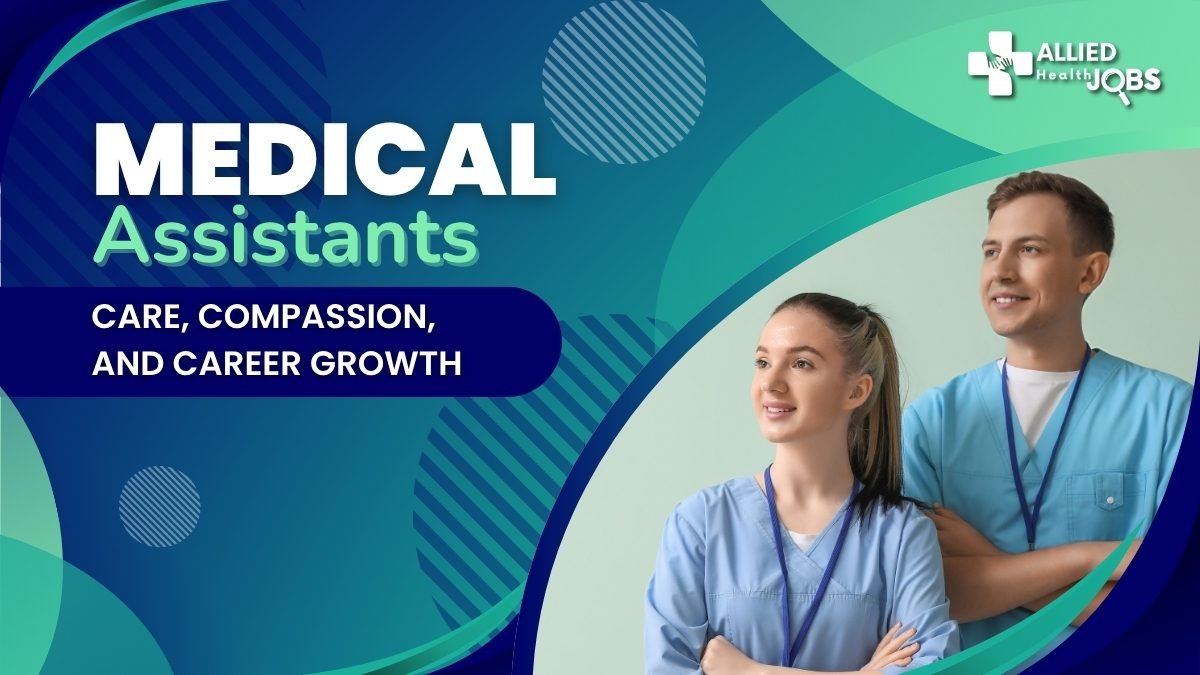
The Medical Assistant: Little Schooling, Big Impact
Among the many Top Allied Healthcare Jobs, the medical assistant role carries the least amount of training in the healthcare arena. Medical assistants are multitasking professionals performing both administrative and clinical jobs, making them essential in Allied Health Care Jobs. While industry insights tend to show that typically, postsecondary certificates or diplomas are minimum requirements, taking at most anywhere from 9 to 12 months to complete, very few Allied Jobs in health care can boast of such accessibility.
What Does a Medical Assistant Do?
Medical assistants provide services at clinics, hospitals, and private medical practices to guarantee smooth operations in daily activities. Their duties involve performing:
- Administrative tasks: Scheduling patients for appointments, managing patient records, and billing for the medical services rendered.
- Clinical tasks: Attending to patients by taking their vital signs, preparing them for examination, and assisting in the performance of minor procedures.
Their unique interlacing of duties makes them crucial in Allied Health Professionals Hiring.
Training and Certification for Medical Assistants
Candidates choosing to enter the service may undertake a certificate or diploma program from a community college, technical school, or online option. Such programs cover human anatomy, medical terminology, and office procedures to prepare students for Allied Health Job Openings. Certifications are kept optional; however, a Certified Medical Assistant (CMA) credential from the American Association of Medical Assistants will enhance employment prospects in Allied Health Employment Opportunities. This short duration of training for most programs (usually less than a year) permits graduates to quickly enter the Allied Healthcare Positions.
Other Quick-Entry Allied Health Roles
Besides medical assistants topping the ranks, a few Allied Healthcare Jobs require little or no schooling. These jobs provide alternative Allied Healthcare Career Paths for the budding candidates of Top Allied Healthcare Jobs.
Phlebotomist: A Quick Route into Patient Care
The whole idea behind phlebotomy is for a phlebotomist to take blood samples from a patient for testing, transfusion, or donation purposes. Usually, a phlebotomy training program would last from four to eight months, so it is an accessible pathway into Allied Healthcare Jobs. Certification will increase employability in Allied Jobs: for instance, Certified Phlebotomy Technician (CPT). Phlebotomists may be encountered working within hospitals, laboratories, and centers for voluntary blood donations. They are all essential to medical diagnostics.
Pharmacy Technician: Ensuring the Availability of Medication
Pharmacy technicians help pharmacists in dispensing medicines and managing pharmacy functions. Training Courses take between six and twelve months to make a candidate eligible for Allied Healthcare Job Openings in a retail pharmacy or hospital, or clinic setting. Being certified by the Pharmacy Technician Certification Board (PTCB) is highly preferred by Allied Healthcare Professionals Hiring. This is a great opportunity for those Healthcare Job seekers interested in managing medications.
Advantages of Choosing Quick-Entry Allied Health Careers

There are numerous benefits offered by the Allied Health Careers choice, requiring minimal schooling:
- Quick Workforce Entry: A Small training period means that one can enter the workforce quickly and fill Allied Healthcare Jobs.
- Career Flexibility: Jobs like medical assistant or phlebotomist may serve as stepping stones into advanced Allied Healthcare Career Paths, such as nursing or lab technology.
- Job Security: Increasing demand in Allied Healthcare Positions assures steady Allied Health Employment Opportunities.
- Competitive Salaries: Entry-level Allied Healthcare Jobs, such as medical assistants, make median annual wages of about $38K and may increase with experience as they move along.
These benefits make the Top Allied Healthcare Jobs attractive to candidates eager to start a career fast without much school.
Challenges and Considerations
Despite being offered minimal schooling, Allied Healthcare Jobs come with some challenges. Entry-level jobs may require long working hours, may sometimes be emotionally demanding, and some tasks may need physical exertion. In healthcare, medical assistants often have to run at full tilt with other responsibilities in a fast-paced environment. Still, the growth potential in Allied Health Careers and the joy of helping patients outweigh these difficulties for many workers.
How to Get Started
Follow the steps below to obtain Allied Health Job Openings:
- Research Programs: Look for accredited certificate or diploma programs for medical assistants, phlebotomists, or pharmacy technicians.
- Get Certified: While certification may not always be required, it helps in Allied Healthcare Professionals Hiring.
- Apply for Jobs: Search Allied Health Employment Opportunities on Allied Health Jobs and customize your application to complement your relevant skills.
- Make Contacts: Networking with Healthcare Jobs people at career fairs or online through LinkedIn can reveal Allied Health Staffing Jobs.
Conclusion
Allied Health Careers gives one access to meaningful employment that does not require much education. Among Jobs in Allied Healthcare, medical assistants require the least schooling and training, which may take as little as 9 months. Other Allied Healthcare Positions include phlebotomists and pharmacy technicians with the same ability to get into the workforce promptly, thus ensuring Allied Health Employment Opportunities. These Top Allied Healthcare Jobs provide ladders of ease, stability, and growth, and would be perfect for anyone just wanting to step into a healthcare career. In pursuing Allied Health Staffing Jobs, one can account for a direct impact on patient care, while also paving a pathway for advancement in Allied Healthcare Career Paths.
Follow us on Social Media: LinkedIn | Facebook | Twitter | Instagram